
公告:請先 矯正屈光不正 .再進行雙眼皮手術.萬分感激.
部落格全站分類:醫療保健

Abstract: COVID-19, also known as Coronavirus disease, is a respiratory infection caused by severe acute respiratory syndrome coronavirus 2 (SARS-CoV 2). Transmission mainly occurs via direct contact or aerosol droplets. The infection may present asymptomatically or with fever and dry cough. Individuals who are over 65 years of age, immunosuppressed, or have preexisting conditions have a higher risk of developing severe symptoms and complications. Management is based on supportive care.
Updated April 7, 2020
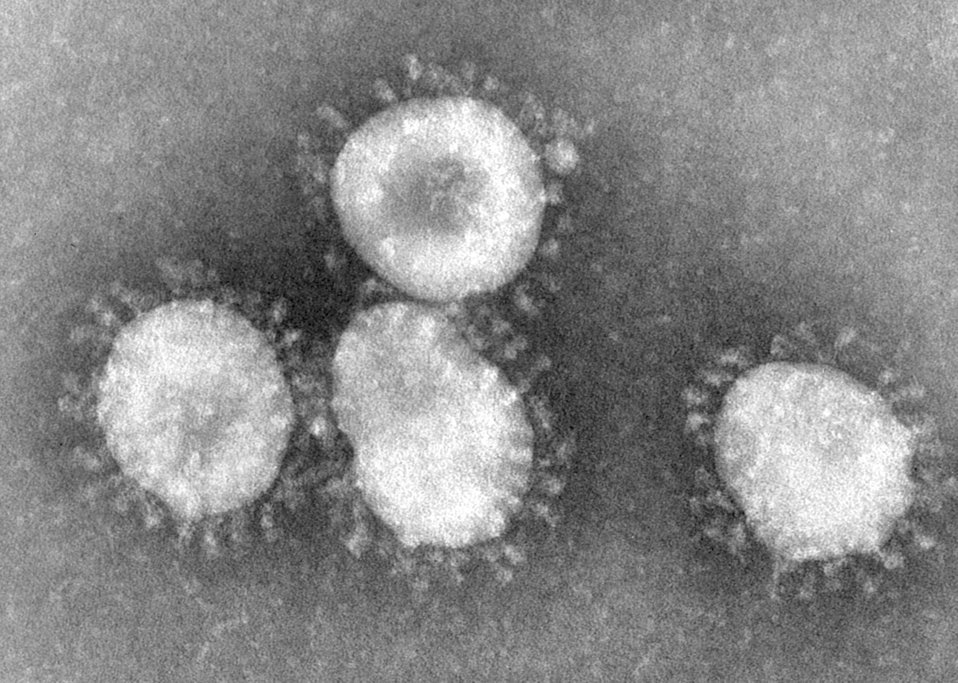
Coronaviruses (CoV) are a family of enveloped, positive-sense, single-stranded RNA (+ssRNA) viruses. They tend to cause mild upper respiratory diseases in humans. Of the 7 known species of CoV, only 3 are known to cause severe infections in humans:
Selected diseases caused by Coronaviruses
| Common cold | GI tract infection | Severe acute respiratory syndrome (SARS) | COVID-19 (Wuhan City, China) | |
|---|---|---|---|---|
| Incubation | 3 days | 3 days | 4–6 days | 2–14 days |
| Incidence | Most common | Rare | Rare | ~ 1,200,000 cases (Dec 2019 – April 2020) |
| Prognosis | Complete resolution | Complete resolution (up to 25% fatal for NEC) | 30% resolution 70% severe infection 10% fatal | 80% resolution 15% severe infection 5% critical infection 5.6% fatal (based on confirmed cases as of April 7, 2020, may change) |
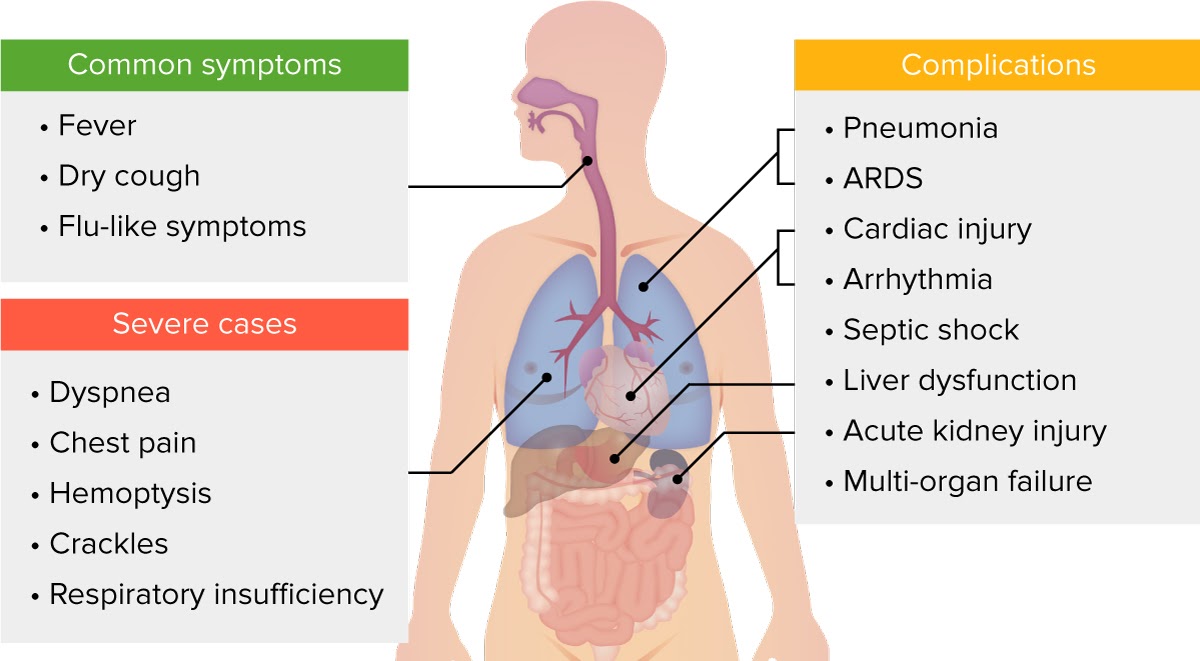
| Clinical manifestation | Sneezing, rhinorrhea, headache, sore throat, malaise, fever, chills | Diarrhea, gastroenteritis, neonatal necrotizing enterocolitis | Fever > 37,8°C (100,0°F), muscle pain, lethargy, cough, sore throat, malaise Shortness of breath/ pneumonia (direct viral or secondary bacterial) | Asymptomatic Mild infection: fever, dry cough, malaise, dehydration Severe infection: high fever, shortness of breath, chest pain, hemoptysis Complications: pneumonia, ARDS, sepsis, multi-organ failure |
NEC: Necrotizing enterocolitis ARDS: Acute respiratory distress syndrome
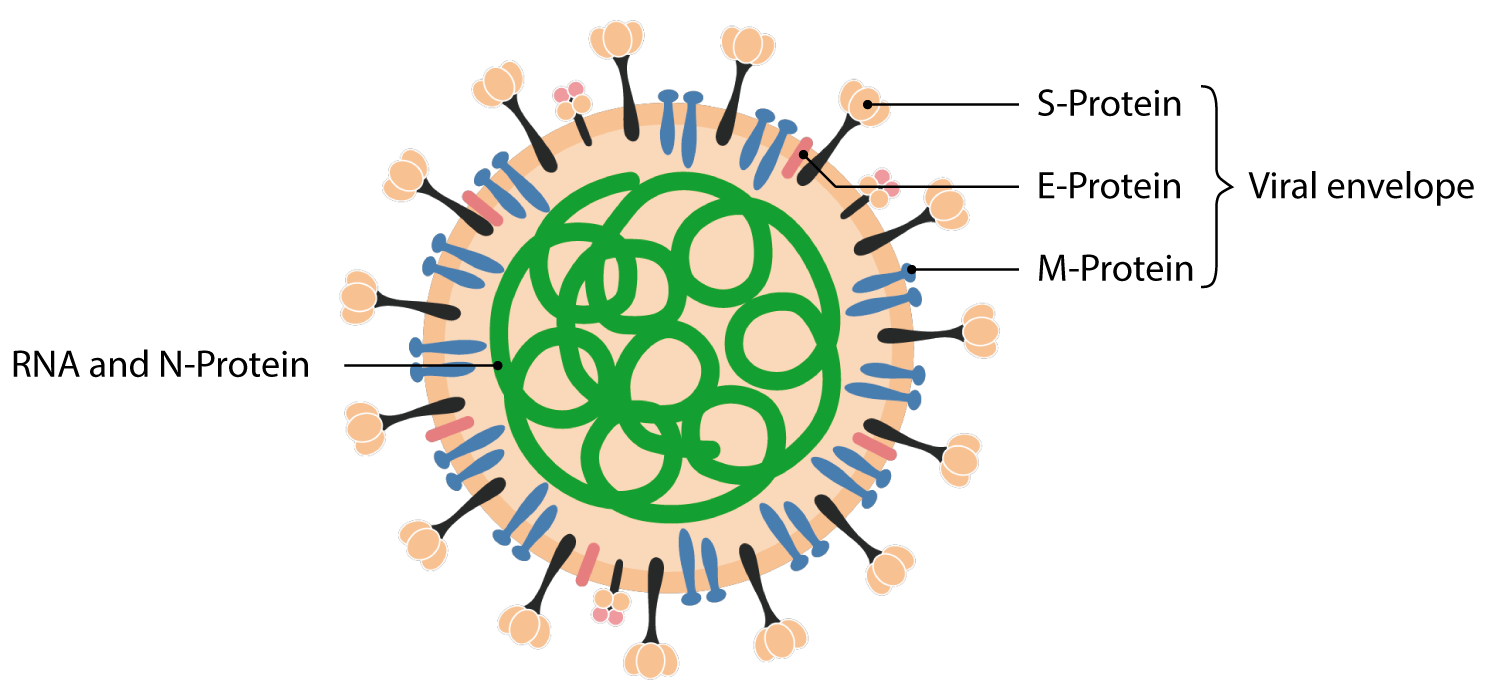
The SARS-CoV 2 virion is ~1,250 nm in diameter, and its genome ranges from 26 to 32 kilobases, the largest for an RNA virus. It has 4 structural proteins: spike (S), envelope (E), membrane (M), and nucleocapsid (N).
SARS-CoV 2 attaches to the host cell by binding its S proteins to the receptor protein, angiotensin-converting enzyme 2 (ACE2). ACE2 is expressed by epithelial cells of the intestine, kidney, blood vessels, and most abundantly in type II alveolar cells of the lungs. The virus induces a drop of ACE2 in human cells, possibly inducing lung damage.
The human enzyme transmembrane protease, serine 2 (TMPRSS2) is also used by the virus for S protein priming and to aid in membrane fusion.
Related Video Courses:
CoV are zoonotic or transmitted to humans through animals. It is hypothesized that horseshoe bats are the natural reservoir of SARS-CoV 2 since its genome is 97% identical to that of a bat coronavirus. The intermediate host is still unknown.
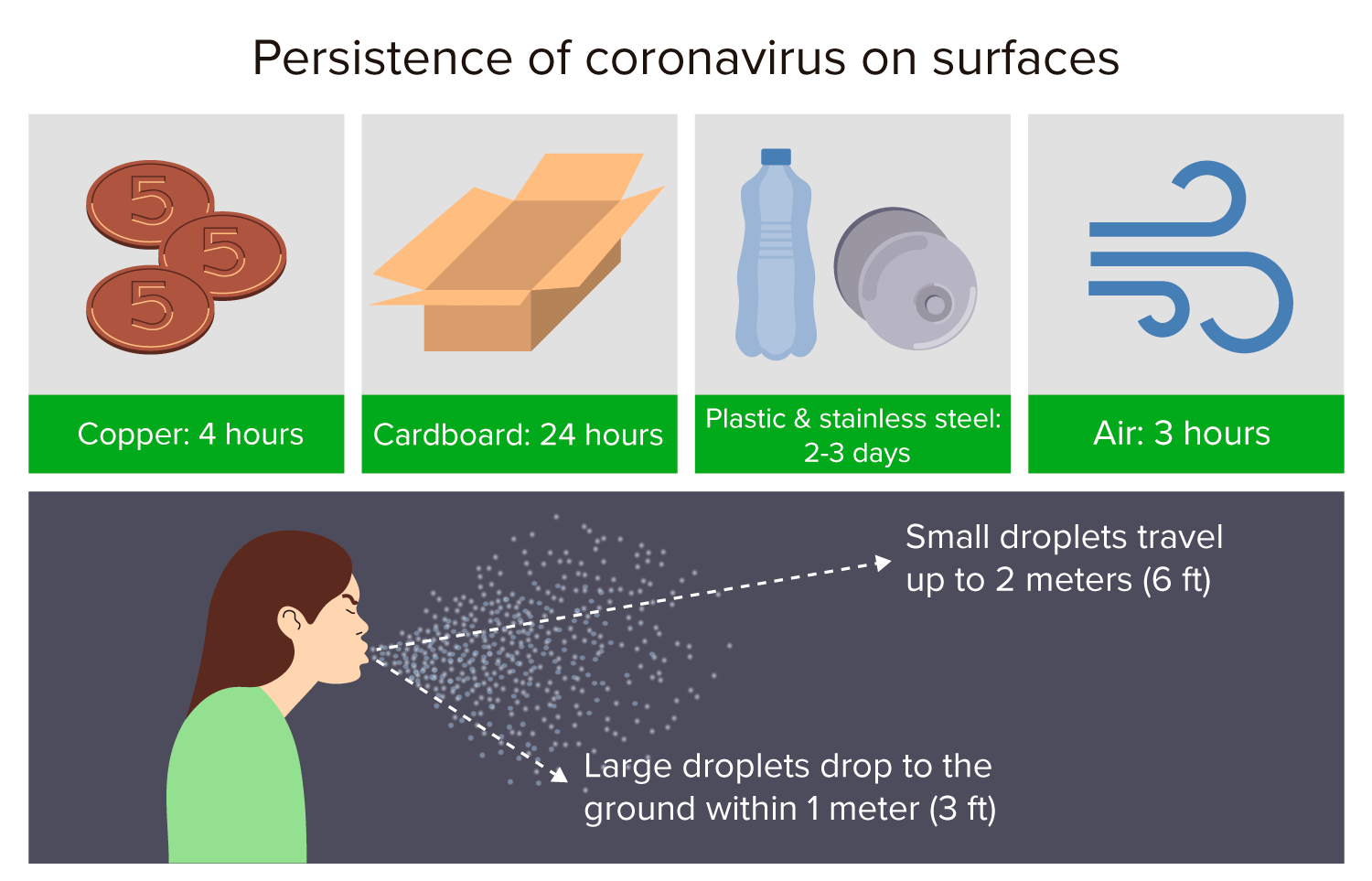
Once in humans, the virus is transmitted mainly via inhalation of aerosol droplets from coughing, sneezing, or talking of symptomatic individuals. In the air, larger droplets tend to drop towards the ground within 1 m (3 ft), while smaller droplets can travel as an aerosol cloud over 2 m (6 ft) and remain viable in the air for up to 3 hours under certain conditions. Other forms of transmission include:
The period of highest infectivity for symptomatic cases ranges from 2 days before the onset of symptoms up to 3 days after their resolution. (exact limits are still under investigation).
The reproductive number (R0), or the number of secondary infections generated from 1 infected individual, is 2 to 2.5, higher than for influenza (0.9-2.1). COVID-19 is highly contagious due to the following aspects:
The first case of COVID-19 was traced back to Wuhan, China, in late November 2019, with an outbreak developing in December. The virus quickly spread, with widespread ongoing transmission occurring globally. More than 1 million people were infected and over 55,000 died within the first 4 months of global spread. COVID-19 was characterized as a pandemic on March 11, 2020.
Coronavirus COVID-19 Global Cases by Johns Hopkins CSSE. https://www.arcgis.com/apps/opsdashboard/index.html#/bda7594740fd40299423467b48e9ecf6.
This proportion of severe and critical to mild cases is higher than in influenza infections.
Asymptomatic cases:
Mild cases:
Severe cases and complications:
Common complications of COVID-19: viral/interstitial pneumonia, acute respiratory distress syndrome (ARDS), sepsis, and septic shock. Other complications: cardiac injury, arrhythmia, liver dysfunction, acute kidney injury, and multi-organ failure.
Risk factors for the severe form and complications of COVID-19:
The expression of ACE2 is highly increased in patients being treated with ACE inhibitors or angiotensin II type 1 receptor blockers (ARBs). Contrary to initial reports, the American College of Cardiology has pointed out that there is no data to support the claim that ACE inhibitors and ARBs increase the risk of COVID-19 infection, and recommends that patients who already use these medications should continue to do so while further studies are performed.
Refractory cases:
Nearly 50% of COVID-19 patients did not achieve clinical and radiological remission within 10 days of hospitalization. Patients with male sex, older age, anorexia, and no/low fever at the time of admission have a higher risk of presenting a refractory progression.
Related Video Courses:
Polymerase chain reaction (PCR) is currently the only test being used to confirm cases of COVID-19 infection and should be performed as soon as possible once a person under investigation (PUI) is identified. The specimens used for testing include:
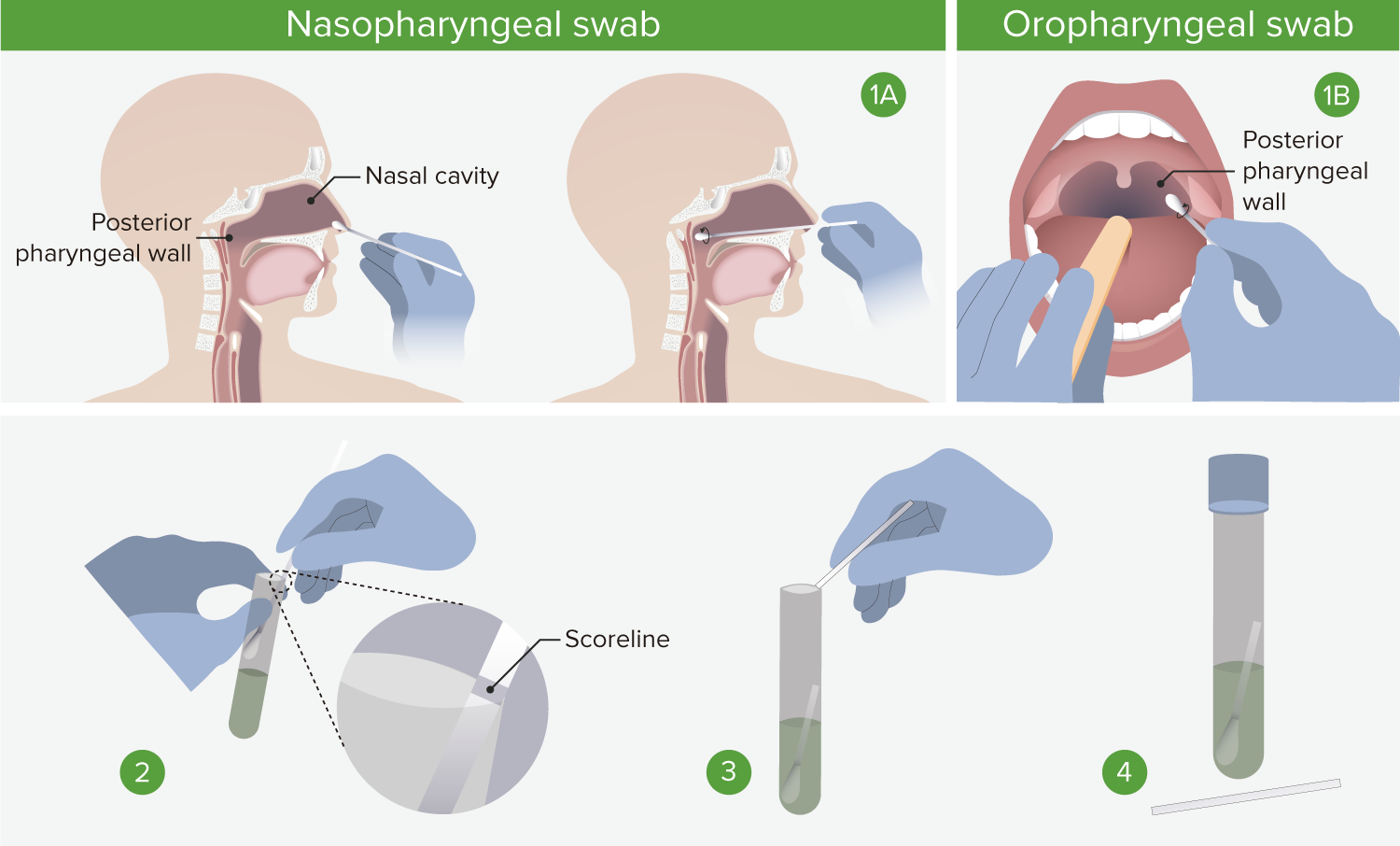
1. Nasopharyngeal swab: Insert swab into a nostril parallel to the palate, and carefully slide it forward until a soft resistance is felt. Swab should reach a depth equal to distance from nostrils to outer opening of the ear. Rotate for several seconds to absorb secretions, and then slowly remove. 1. Oropharyngeal swab: Insert swab into the oral cavity without touching the gums, teeth, and tongue. A tongue depressor may be used. Swab the posterior pharyngeal wall using a rotatory motion. 2. Place swabs immediately into sterile tubes containing 2-3 ml of viral transport media. If both swabs are collected, they should be combined into a single vial. 3. Carefully leverage the swab against the tube rim to break the shaft at the scoreline. 4. Store specimens at 2-8°C for up to 72 hours after collection. If a delay in testing/shipping is expected, store specimens at -70°C or below. Use only synthetic fiber swabs with plastic shafts. Calcium alginate swabs or swabs with wooden shafts may inactivate the virus and inhibit PCR testing.
During an ongoing COVID-19 outbreak, laboratory testing should be prioritized as follows according to the CDC:
All persons under investigation (PUI) and confirmed cases should be reported according to regulations set forth by local health authorities and the national surveillance center.
Patients with COVID-19 present with the following laboratory and radiological findings. These are more pronounced and common in severe cases but can be present even in mild infections.
In hospitalized COVID-19 patients with severe infections, regular laboratory testing and imaging are necessary for the assessment of disease progression and complications.
Causes of death in COVID-19 patients include progressive hypoxia, multi-organ failure, and hypotensive shock.
Differential Diagnoses
| COVID-19 | Influenza | Common cold | |
|---|---|---|---|
| Incubation period | 2–14 days | 1–4 days | <3 days |
| Onset | Gradual | Sudden | Sudden |
| Fever | Very common | Very common | Rare |
| Dry cough | Very common (mild to severe) | Very common (mild to severe) | Common (usually mild, can be productive) |
| Fatigue | Common | Very Common | Rare or mild |
| Myalgia | Common | Very Common | Mild |
| Sneezing | Sometimes | Rare or mild | Very common |
| Nasal congestion | Rare or mild | Common | Very common |
| Headache | Sometimes | Very common | Rare or mild |
| Sore throat | Sometimes | Sometimes | Very common |
| Diarrhea | Sometimes | Sometimes | Rare |
| Dyspnea | Common | Rare | Never |
No specific treatment for COVID-19 is currently available. As a healthcare professional, one must always implement practices for infection prevention and control (IPC) whenever dealing with a PUI or laboratory-confirmed COVID-19 case.
Patients with mild symptoms and no risk factors do not require hospitalization and are recommended to begin supportive at-home care. In the case of antipyretics, the use of ibuprofen is now considered safe according to the latest WHO advice (March 17, 2020). In the outpatient setting, one must seek professional medical assistance if any of the following emergency warning signs develop:
The decision to monitor a patient in the inpatient setting should be made on a case-by-case basis. Once hospitalized, supportive care and acute measures should be applied as necessary for complications, such as:
For the latest step-by-step management guidelines, see the “WHO interim guidance on clinical management of severe acute respiratory infection when novel coronavirus (nCoV) infection is suspected.”
The mortality rate of COVID-19 varies across different nations and age groups, with a global average of 5.6%; with 1,279,722 cumulative cases and 72,614 deaths according to the WHO Situation Report-78 on April 7, 2020. Patients >80 years of age have a mortality rate of 15%.
The ongoing pandemic makes it difficult to determine an accurate mortality rate at this time. The mortality rate is assumed to be lower due to many undetected cases (lack of widespread testing in many countries and asymptomatic individuals not seeking to be tested).
Investigational therapies
Several clinical trials are currently being performed to further the development and research of antiviral drugs against SARS-CoV 2. However, it’s important to note that there is no available data as of April 6, 2020, to support the recommendation of any of the following investigational therapeutics for patients with confirmed/suspected COVID-19:
Camostat mesilate (CM): a TMPRSS2 inhibitor, is reported to block viral entry by inhibiting S protein priming.
For more information on international clinical trials, see the WHO website and clinicaltrials.gov
Related Videos:
Individuals who live within an area undergoing an outbreak are advised to prevent the spread of COVID-19 infection. General recommendations include:
Isolation and quarantine can be discontinued only after the following criteria has been met:
For more detailed guidelines on how to prevent infection, see the Interim Infection Prevention and Control Recommendations for Patients with Suspected or Confirmed Coronavirus Disease 2019 (COVID-19) in Healthcare Settings (CDC).
Vaccine:
There is no FDA-approved vaccine yet available to prevent COVID-19. A Phase 1 clinical trial evaluating an investigational vaccine began on March 16, 2020, in the Kaiser Permanente Washington Health Research Institute (KPWHRI) in Seattle, WA, USA. The vaccine is called mRNA-1273, and is designed to encode for a prefusion-stabilized form of the S protein. The trial will enroll 45 healthy adult volunteers aged 18 to 55 years over approximately 6 weeks.
References:
www.who.int/health-topics/coronavirus
www.cdc.gov/coronavirus/2019-nCoV/hcp/index.html
coronavirus.jhu.edu/map.html
www.thelancet.com/journals/lanres/article/PIIS2213-2600(20)30116-8/fulltext
www.nature.com/articles/nm1267
www.biorxiv.org/content/10.1101/2020.03.14.988345v1
www.ncbi.nlm.nih.gov/pmc/articles/PMC6893680/
www.ncbi.nlm.nih.gov/pmc/articles/PMC4369385/
www.journalofhospitalinfection.com/article/S0195-6701(20)30046-3/fulltext
mmrjournal.biomedcentral.com/articles/10.1186/s40779-020-00240-0
www.thelancet.com/journals/laninf/article/PIIS1473-3099(20)30232-2/fulltext
www.ncbi.nlm.nih.gov/pubmed?term=32109013
academic.oup.com/cid/advance-article/doi/10.1093/cid/ciaa270/5805508
www.cell.com/cell/fulltext/S0092-8674(20)30229-4?rss=yes#secsectitle0065
Human face is the most sophisticated and context-rich communication tool that ever existed. It was perfected for its purpose by millions years of evolution. Whenever we feel joy or sadness, become scared or surprised – our facial muscles contract and relax with precision and in excellent harmony. They deliver our message to the world. Just one smile can tell us much more than a thousand words.
“I want my smile back!” This is the number one wish of all Bell’s palsy sufferers. To produce a genuine smile we need a highly coordinated work of many facial muscles. And that can become quite a challenge if the recovery takes longer than a couple of months.
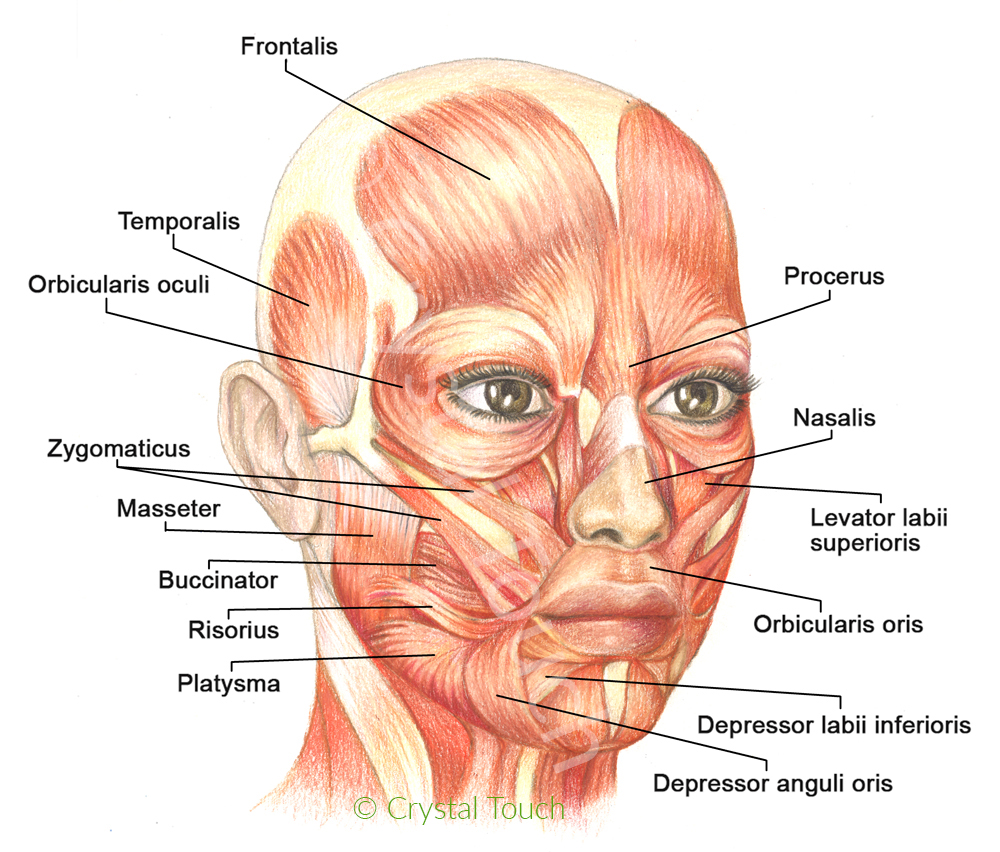
Let’s take a closer look at our facial muscles, their names and functions. Please study facial muscles carefully. This will be important later, when we discuss the causes and the recovery from facial asymmetry and from synkinesis.
Synergists and antagonists. Muscles that “help” each other to produce a certain movement are called synergists. Muscles that produce movements in opposite directions are called antagonists.
Frontalis muscle lifts the eyebrows, makes horizontal forehead wrinkles when we are surprised.
Orbicularis oculi – circular muscle of the eye. Closes the eyelids, squints the eye. These two muscles are antagonists. Lift and hold your eyebrow with your finger and then try to squint your eyes. Difficult, isn’t it?
Procerus is a frown muscle. Pulls medial sides of eyebrows down and together.
Corrugator superclii – pulls eyebrows together.
Zygomatic muscles (major and minor) move the mouth corners up- and outward when we smile.
Risorius – “smile” muscle. Pulls mouth corners laterally (outward) and forms dimples in the cheeks. This muscle is not always active in all people.
Orbicularis oris (circular muscle of the mouth) puckers lips and brings mouth corners towards the middle line.
Depressor anguli oris pulls mouth corners downward.
Levator labii superioris and depressor labii inferioris pull the upper and lower lips up- and down respectively when we grin.
Mentalis (chin muscle) pulls up the chin as we express disappointment, doubt and some other negative emotions.
Platysma is a surface muscle of the neck. Platysma is engaged in the expressions of fear, disgust and some other negative emotions.
The “crooked”, asymmetrical smile after Bell’s palsy happens when depressor anguli oris muscle on the affected side is unnecessarily activated together with zygomatic muscles (its antagonists) while Bell’s palsy sufferer wants to produce a smile. In this “fight” the former muscle often wins over the latter, simply because it is larger and stronger. Result: mouth corner on the affected side ”looks down” instead of “up”. Quite often several small dimples may appear on that side of the chin, leading to a further disfigurement of facial expressions.
Facial Synkinesis is another common complication of long-standing Bell’s palsy. There are several opinions in the medical world about the causes of synkinesis. The most popular (and still controversial) is the theory of aberrant regeneration or simply said, re-connection of the regenerating branches of the facial nerve to the “wrong” muscles. As a conclusion of this theory, Synkinesis is considered to be an irreversible complication of Bell’s palsy.
The results of an extensive scientific research at Crystal Touch clinic have demonstrated that with VERY few exceptions, facial synkinesis after long-standing Bell’s palsy have different origins. The actual cause of synkinesis is closely related to the higher cerebral activity. The recovery results of our numerous patients after 5, 10 and even 25 years since the onset of Bell’s palsy, prove that SYNKINESIS IS REVERSIBLE.

Crystal Touch Bell’s palsy clinic presented the results of our scientific research during the World Congress for NeuroRehabilitation in Philadelphia, USA (10-13 May 2016). Read more…
– Alex Pashov![]()
Crystal Touch Bell’s palsy clinic


